
Maryborough’s Trusted House Slab Experts

Engineering Standards and Details That Actually Matter
Every house slab we construct meets Australian Standards AS 2870, gets engineered specifically for your soil conditions, and comes with the structural certification your building certifier needs. But what really sets our work apart is how we handle the details that other concrete crews skip – the vapor barriers that protect against moisture, the termite protection that integrates seamlessly with your slab, the precise reinforcement placement that prevents cracking, and the curing protocols that give you strength that lasts.
Standing Behind Our Work in Your Community
Whether you’re building your first home in Maryborough, adding an extension to your existing property, or replacing a failed foundation, you deserve a concrete contractor who shows up when they say they will, who explains what they’re doing and why, and who stands behind their work long after the concrete hardens. That’s what we do, and we’re ready to prove it on your project.

Types of House Slabs We Build in Maryborough
House Slab Applications Across the Fraser Coast
New Home Construction Foundations
Your new home starts with its foundation, and we pour house slabs for owner-builders, project home companies, and custom builders throughout Maryborough. From compact three-bedroom homes in Tinana to larger family homes out at Dundowran, we scale our approach to match your project.Home Extensions and Additions
Adding rooms to your existing Maryborough home means matching new concrete work to old, and that requires more skill than pouring a fresh slab. We assess your existing foundation, determine the best method to integrate new work, and handle the engineering coordination to make sure everything ties together properly.Granny Flat Foundations
The demand for granny flats has exploded across Maryborough over the past five years. These secondary dwellings need proper foundations just like main homes, with the same engineering and council compliance. We’ve poured dozens of granny flat slabs, and we understand the specific regulations Fraser Coast Council applies to these structures.Renovation and Replacement Work
Sometimes an existing house slab is beyond saving. We’ve replaced failed foundations for homes across Maryborough, working with structural engineers to determine if replacement makes more sense than repair. This work is disruptive and expensive, but when done right, it gives you decades more life from your home.Split-Level Home Slabs
Maryborough’s hilly terrain means split-level designs come up regularly, particularly in elevated suburbs. These homes need multiple slabs at different heights, all engineered to work together as your home settles over time. The coordination between concrete, excavation, and structural framing matters more on these projects than on simple single-level builds.Commercial Residential Projects
Duplexes, townhouses, and small apartment buildings all need commercial-grade house slabs. We handle the larger scale, the increased inspection requirements, and the coordination with multiple trades that commercial residential work demands.
Foundation Design Requirements That Meet Code
• Australian Standards Compliance (AS 2870): All slabs meet national standards for thickness, reinforcement, edge beams, and tolerances based on soil type.
• Structural Engineering Specifications: Local engineers provide detailed plans for concrete strength, reinforcement, and construction tailored to each site.
• Load-Bearing Calculations: Slabs are designed to support dead loads, live loads, and environmental forces like wind uplift.
• Soil Bearing Capacity Assessment: Slabs are built according to geotechnical reports to prevent excessive settlement; poor soils may require larger slabs or ground improvements.
• Foundation Depth Requirements: Edge beam and slab thickness follow engineering specs precisely, varying with soil and load conditions.
• Reinforcement Specifications: Certified steel bars (N12/N16) are placed according to engineering requirements to prevent cracking and ensure durability.
• Professional Certification: All required documentation, including engineering plans, soil tests, and inspection certificates, is provided for council sign-off.

What You Need to Know Before Starting a Trenching Project
-
Concrete Strength Testing: Test samples are sent to certified labs at 7 and 28 days to ensure specified strength is met; results are provided for building inspection.
-
Reinforcement Inspection: Certifiers verify correct bar size, spacing, tie wire connections, and proper placement before pouring.
-
Level & Fall Verification: Laser levels ensure proper slab levels and drainage falls (typically 1:100) during the pour.
-
Dimensional Accuracy: Slab dimensions, wall positions, and openings are checked against engineering plans to ensure tight tolerances.
-
Surface Finish Standards: Slabs are finished flat and level within 5mm over 3m to simplify framing and floor installation.
-
Curing & Protection: Moisture and time are controlled using curing compounds, coverings, or fogging to prevent cracks.
-
Professional Sign-Off: Complete documentation—including engineering certificates, test results, and inspection reports—is provided for building certifier approval.
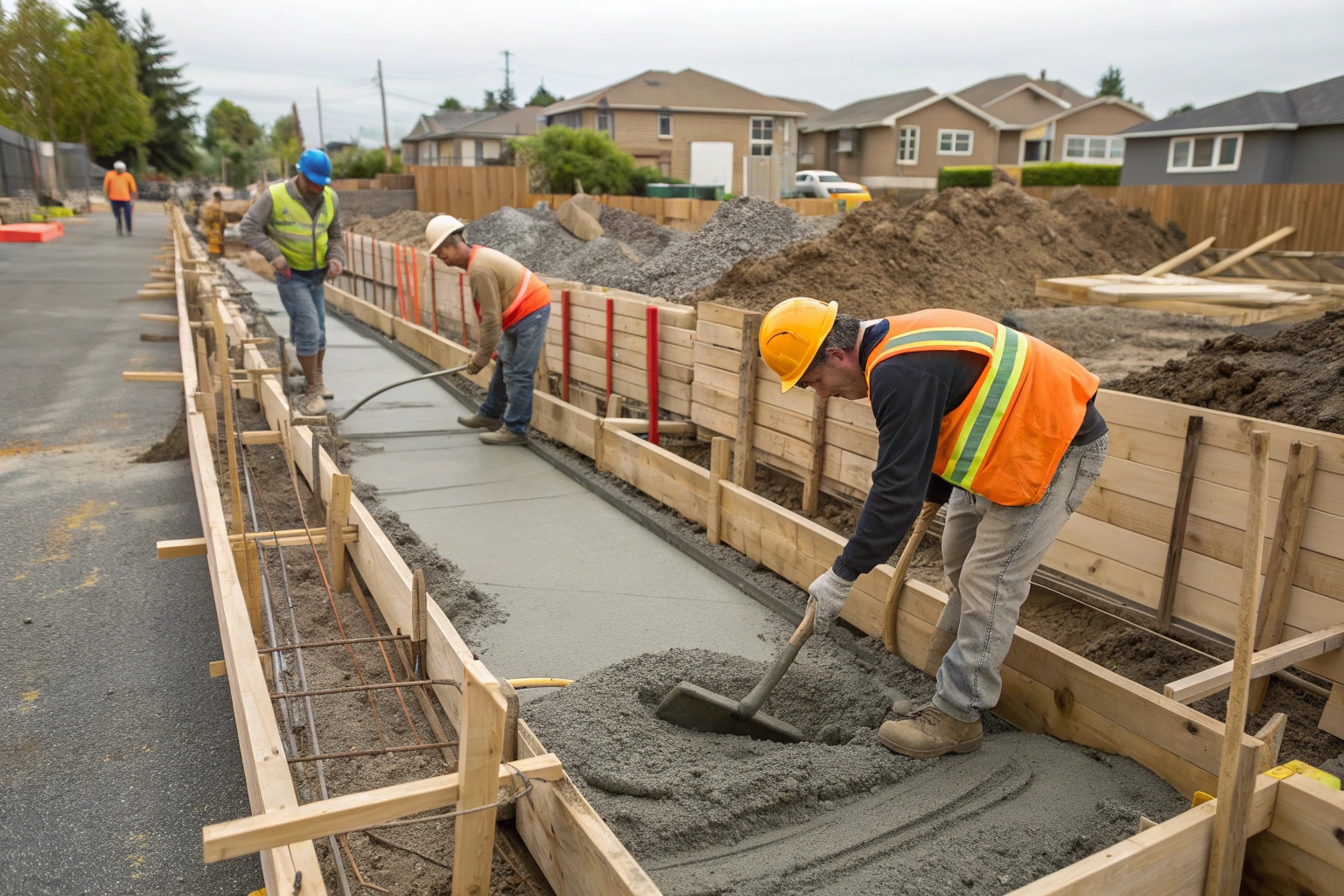
Integrated Systems in Your House Slab
- Termite Protection: Physical or chemical barriers, like stainless steel mesh and treated soil, are integrated to prevent termite damage and allow future inspections.
- Insulation: Rigid underfloor insulation is positioned and protected during the pour for improved thermal performance and energy efficiency.
- Electrical Conduits: Pathways for power and data cables are installed in the slab according to plans, avoiding costly post-pour modifications.
- Plumbing Rough-In: Sewer, water, and drain lines are accurately placed and protected before pouring concrete.
- Gas Services: Sleeves for natural gas lines are coordinated to allow safe passage and future maintenance.
- Telecommunications: NBN and phone conduits are pre-installed to streamline connectivity after move-in.
- Future-Proofing: Extra conduits and access points are included for potential future services like pool lighting or new technology.
Professional Services We Provide
Ready to start your house slab project?
Ready to start your house slab project with a contractor who understands Maryborough conditions? Call us today for a detailed quote based on your specific site and building plans. We’ll explain exactly what your foundation needs and why, giving you confidence your home starts on solid ground.
FAQs About About House Slabs in Maryborough
April through October gives you the most reliable weather for house slab construction in Maryborough. You’re outside the worst of wet season, temperatures are manageable, and you’re less likely to get afternoon storms that disrupt pours or curing. That said, we pour year-round when weather windows allow – sometimes you can’t wait six months for perfect conditions. We just adapt our methods and watch forecasts more closely during November through March.
We pour house slabs during wet season regularly, but it requires more planning and sometimes last-minute schedule changes. The key is monitoring weather forecasts, protecting excavations from flooding, and being ready to reschedule if heavy rain threatens during the pour or curing period. We’ve developed techniques over 15 years that let us work safely through Fraser Coast’s wet months. You’ll pay the same price, but you need to be flexible with timing.
Walk around inside and look for doors that won’t close properly, cracks wider than 5mm, or floors that have developed noticeable slopes – these suggest serious foundation problems. Outside, check for large cracks with vertical displacement where one side sits higher than the other, or separation between your slab and brick walls. If you’re seeing multiple warning signs or if problems are getting worse over time, call us for a professional assessment. Sometimes what looks terrible can be repaired, and sometimes minor surface issues hide bigger structural problems.
House slabs get engineered to carry the weight of your home, meet strict building codes, and last 50+ years – they need proper soil testing, structural design, and council approval. Garage slabs typically use lighter construction with less reinforcement and simpler edge beams since they’re only supporting cars and storage, not living spaces. In Maryborough’s reactive clay areas though, even garage slabs need decent engineering or you’ll get cracking and settlement. The construction process looks similar, but the specifications and approval requirements are completely different.
Light rain on concrete that’s already finished and starting to harden usually causes no damage – we just cover it with plastic to protect the surface. Heavy rain on fresh concrete before we’ve finished troweling can pit the surface, wash cement paste off, and create weak spots that need repair. If heavy rain threatens, we either delay the pour or have plastic sheeting ready to cover sections as we finish them.