

Maryborough-Specific Considerations
Building garage slabs in Maryborough requires understanding local conditions that affect concrete performance and compliance. The area’s reactive clay soils swell when wet and shrink dry, creating movement that cracks garage slabs—heavy vehicle loads amplify these stresses, requiring upgraded reinforcement compared to metro areas. Some Maryborough properties need raised garage slabs meeting Fraser Coast Council flood height requirements, affecting door thresholds, ramp design, and overall construction costs. Pouring garage slabs during wet season risks concrete damage from unexpected rain, so we schedule around weather patterns and protect fresh concrete properly to maintain strength and finish quality.


Single and Double Car Configurations
Standard single garage slabs measure around 3 meters by 6 meters, but most people regret not going bigger once they see how much gear accumulates. Double garages give you proper flexibility—two vehicles plus storage, or one vehicle and actual workshop space for projects.

Attached Garage Extensions
Attached garages need careful integration with your existing house slab because the connection points matter. Differential settlement between the two slabs causes cracking if not done properly. The tie-in details and matching levels require specific engineering to prevent problems down the track.

Detached Garage and Carport Bases
Detached garages offer more flexibility in positioning, but require their own access considerations and proper foundations. Carport slabs still require full load capacity even without walls—you’re dealing with the same vehicle weights, and most people end up storing equipment under carports anyway.

Workshop and Multi-Purpose Slabs
Workshop combinations require additional reinforcement where heavy equipment is present, such as lathes, welders, presses, and loaded toolboxes. The loads concentrate differently from vehicle parking. Sloping blocks need stepped slabs or integrated ramps, which require extra engineering.
Design Specifications for Garage Slabs
Getting the dimensions and layout right prevents expensive problems that show up after construction finishes. Most issues trace back to poor planning rather than bad concrete work.
Key Design Elements:
- Dimensions: Minimum 3 meters wide for single garages, but 3.5 meters gives proper clearance. Length depends on vehicles—6 meters handles most cars with rear storage space
- Door clearance: Roller doors need side clearance and level thresholds. Modern four-wheel drives sit higher than old sedans—account for roof racks and bull bars
- Drainage slope: 1:100 fall toward doors or drainage points manages Maryborough’s wet season without creating scraping issues or rolling vehicles
Integration Features to Consider
Modern garages need more than flat concrete surfaces—planning now saves expensive retrofitting later.
Essential Integration Elements:
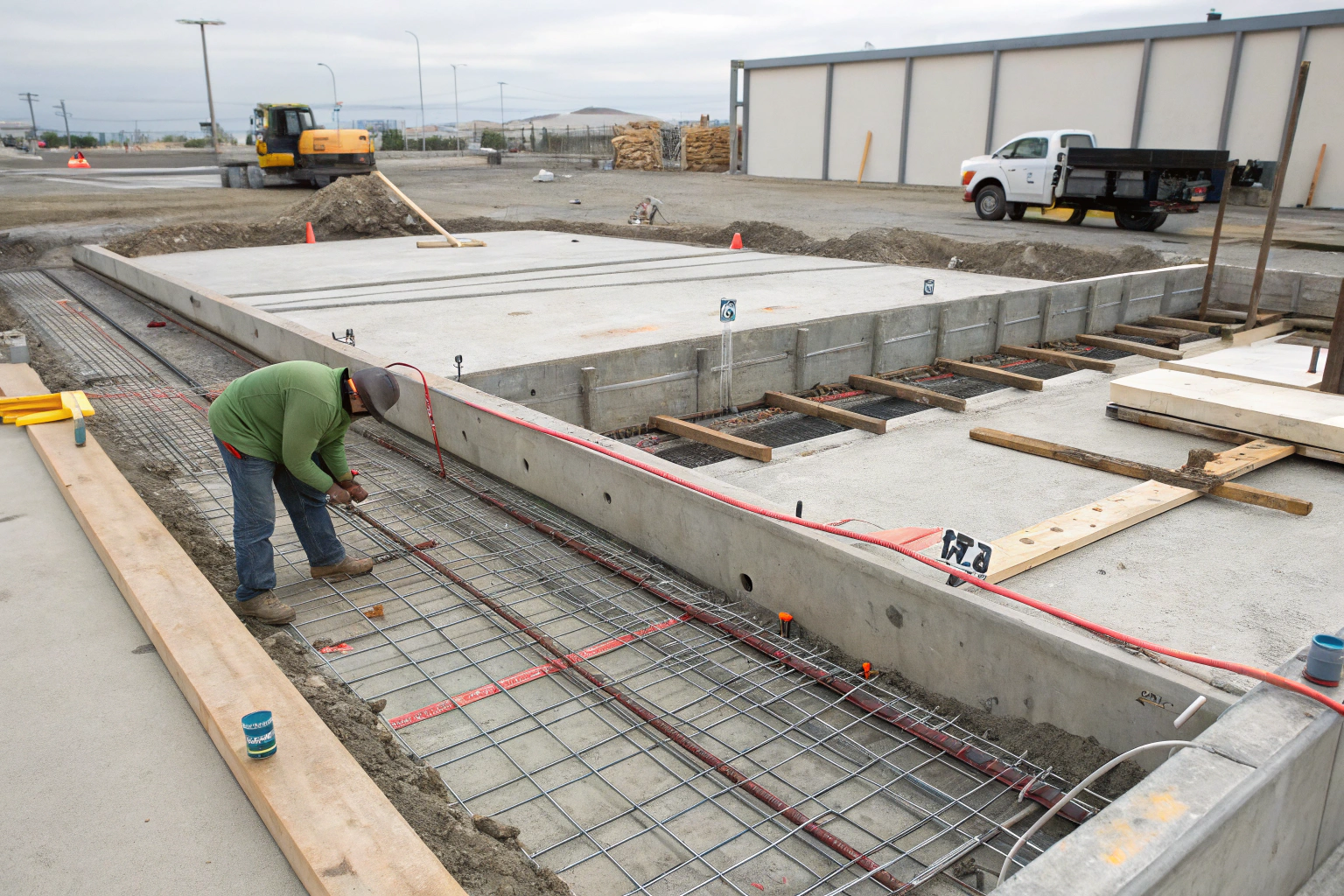
- Electrical conduits: Embed conduits for power points, lighting, and EV charging before pouring. Position near workbenches and equipment locations—changing routes after costs serious money
- Drainage channels: Trench drains manage water from vehicle washing and floor cleaning. Need proper fall and stormwater connection
- Mounting points: Plan equipment anchors and heavy shelving positions during construction. Embedded anchors work better than drilling later into cured concrete
Surface Finish Options
The surface finish affects performance and appearance for decades. Getting this decision right makes daily use easier and protects your investment.
Common Finish Types:
- Broom texture: Most popular garage finish—drawing a broom across wet concrete creates grip when wet, while staying cleanable. Balances traction with practicality for daily vehicle use
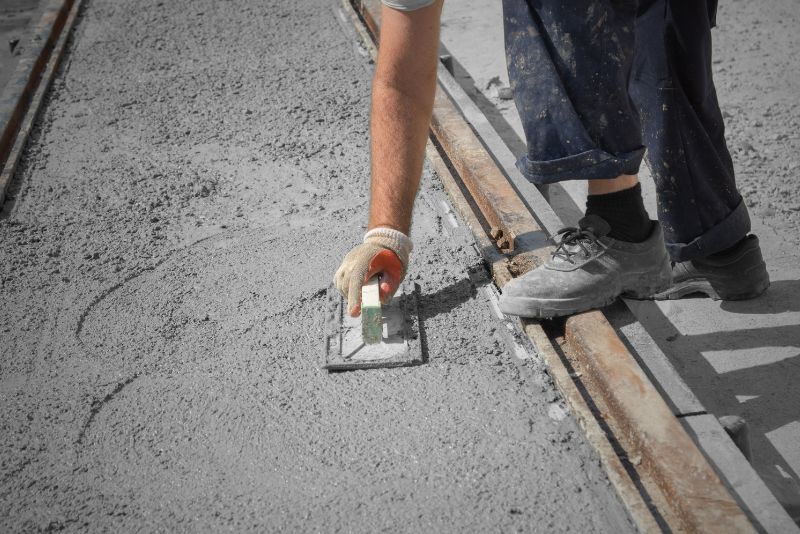
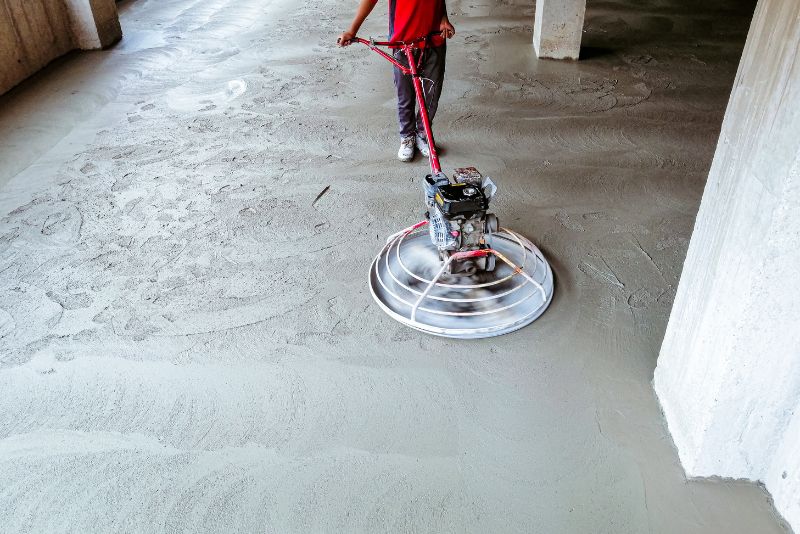
- Smooth trowel: Steel-troweled surfaces resist oil penetration better and clean more easily. Good for show garages where appearance matters
- Sealed options: Penetrating sealers prevent oil stains and water damage. Reapply every 3-5 years for continued protection and easier maintenance

Maintenance and Longevity
Properly built garage slabs need minimal maintenance, but some care extends their working life significantly.
Longevity Essentials:
- Stain prevention: Sealed concrete resists oil and chemical damage better. Clean spills promptly—brake fluid and battery acid eat through unprotected surfaces
- Crack management: Fill small cracks with epoxy before they expand. Early intervention prevents water infiltration and further deterioration
- Resealing schedule: Apply penetrating sealer every 3-5 years, depending on use. Maintains protection and keeps the surface looking decent
FAQs
Standard garage slabs are 100mm thick for regular vehicles. Heavy vehicles, workshops, or boat storage need 125-150mm thickness with upgraded reinforcement. The thickness depends on loads and soil conditions—Maryborough’s reactive clay often requires thicker slabs than coastal sand areas.
Dry season from April to October offers the most reliable conditions. Wet season pours are possible but risky—unexpected rain during or immediately after pouring creates major problems. We monitor forecasts closely and have weather contingency plans for every job.
Yes, but it requires proper engineering to connect new and old concrete. The joint needs reinforcement dowels and careful level matching. Sometimes, cutting back the existing slab edge creates a better connection than trying to butt up against it.
Poor base compaction is the main culprit—the ground settles and concrete cracks. Inadequate reinforcement, no control joints, and clay soil movement also cause cracking. Using incorrect concrete mixes or poor curing practices weakens the slab from the start.
Absolutely. Steel mesh or rebar prevents cracking from shrinkage, settlement, and loads. Unreinforced slabs crack badly within months. The reinforcement needs proper placement—sitting on the ground doesn’t work, it needs to be in the slab’s middle third.
Remove all topsoil and organic material, then compact the clay base properly. Add roadbase or crusher dust in compacted layers, install vapour barrier, position any services, then place reinforcement. Skipping proper compaction guarantees future problems regardless of concrete quality.
Ready to Build Your Garage Slab?
Get your garage foundation done right the first time. Call us today for a free quote and site assessment. We’ll design a slab that handles Maryborough’s conditions and your specific loads properly.