
Our Concrete Slab Expertise Across Maryborough and Fraser Coast
We’ve been pouring concrete slabs across Maryborough and the Fraser Coast for years, building experience with local reactive clay soils, flood-prone areas, and termite management requirements that make our region different from the rest of Queensland.
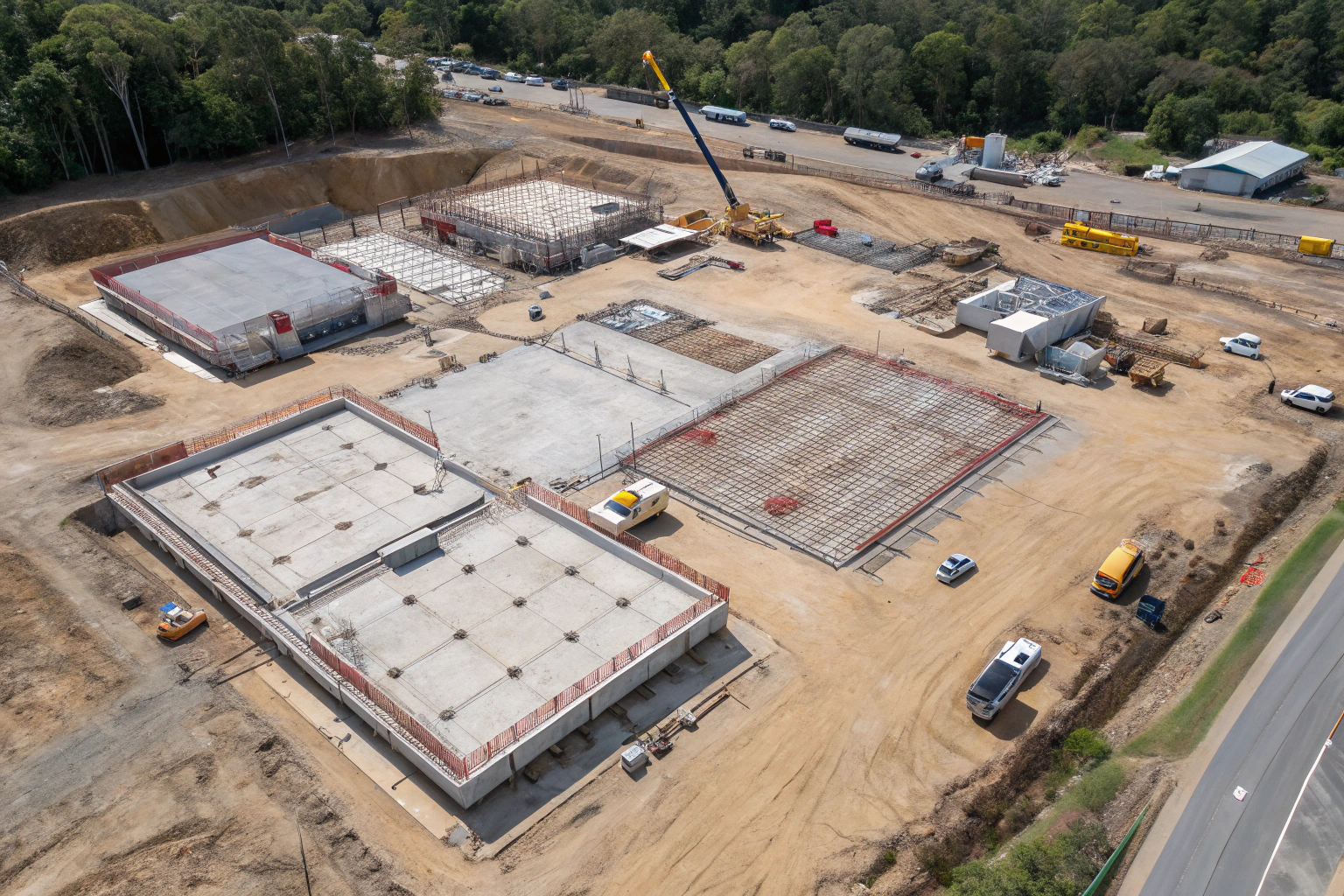
Local Knowledge That Counts Our team knows which Maryborough suburbs need waffle pod slabs for reactive soils, where council requires special flood approvals, and how the subtropical climate affects concrete curing. We’ve worked on properties from Tinana to Torquay, handling everything from residential foundations to commercial warehouses.
Qualified Teams, Quality Results. Our qualified concreters, steel fixers, and formwork carpenters work with structural engineers who understand Fraser Coast conditions. We deliver slabs that pass council inspections the first time, meet Australian Standards, and perform reliably for decades without cracking or settlement issues.

Concrete Slab Applications Across Maryborough Properties
Different properties need different approaches when it comes to concrete slabs. Residential homes need engineered foundations that handle Maryborough’s soil conditions, while rural sheds require slabs designed for heavy machinery and agricultural use. Commercial buildings demand stricter specifications for customer traffic and equipment loads.
We handle slabs for house foundations, granny flats, farm buildings, retail spaces, warehouses, and community facilities across the Fraser Coast. Each property type gets the right slab design, reinforcement, and finishing for its specific use and local council requirements.
🔵 Residential Home Foundations
🔵 Granny Flats and Self-Contained Units
🔵 Rural Sheds and Farm Buildings
🔵 Workshop and Hobby Shed Floors
🔵 Commercial Retail Spaces
🔵 Office Buildings and Medical Centres
🔵 Industrial Warehouses and Distribution Centres
🔵 Manufacturing and Production Facilities
🔵 Carports and Covered Parking Areas
🔵 Outdoor Entertainment and Patio Areas
🔵 Pool Surrounds and Deck Areas
🔵 Driveway Extensions and Additional Parking
🔵 Community Buildings and Church Halls
🔵 Sports Facilities and Recreational Buildings
🔵 Storage Units and Mini Warehouses
Choosing the Right Concrete Slab for Your Maryborough Property
Selecting the right slab type depends on your soil conditions, building use, and budget. House foundations on stable soil work well with conventional reinforced slabs. Reactive clay soils need waffle pod or raft slab construction to handle movement. Large commercial buildings might need post-tensioned slabs for long spans.
Your geotechnical report guides this decision — the soil classification tells us what bearing capacity we’re working with and what slab design will perform best. We review the geotech report with you and explain which slab types suit your site conditions and intended use.
Budget matters too, but choosing a cheaper slab design that’s not right for your soil creates expensive problems later. We recommend slab construction that balances upfront cost with long-term performance. Sometimes spending more on the right slab design saves you thousands in future repairs.
Concrete Slab Reinforcement: Steel That Makes the Difference
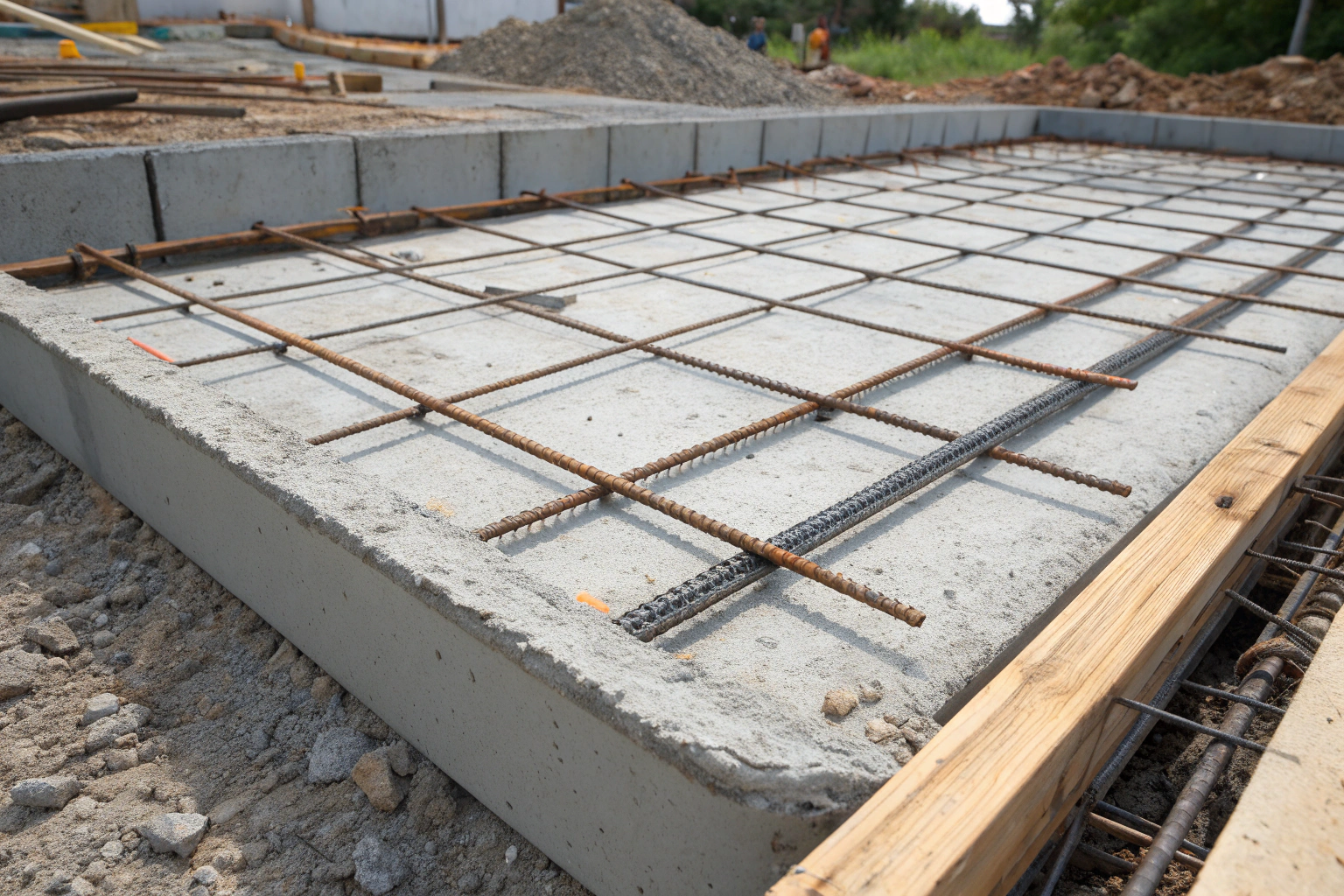
Steel reinforcement gives concrete slabs the strength to resist cracking and carry loads. Most residential slabs use welded steel mesh — sheets of wire welded into a grid pattern. Commercial and industrial slabs often need steel bar (rebar) reinforcement with specific sizing and spacing determined by engineering design.
Reinforcement needs to be positioned accurately within the slab — too close to the surface and it won’t provide adequate strength, too deep and it’s not in the right location to resist tension forces. We use proper bar chairs and spacers to hold steel at the correct height during the pour.
The amount and type of reinforcement depend on soil conditions, slab design, and expected loads. Reactive soils require additional reinforcement to effectively control cracking. Large spans need heavier reinforcement. Industrial slabs that carry heavy loads require substantial steel. Your engineer specifies reinforcement requirements, and we install exactly what’s designed.
Concrete Slab Cracking: Prevention and Solutions
Some hairline cracking in concrete slabs is normal as concrete cures and adjusts to loads. But excessive cracking indicates problems with design, construction, or site conditions. We prevent cracking through proper engineering and construction practices.
Our crack prevention methods:
🔵 Proper slab design for your specific soil type
🔵 Adequate reinforcement placement and sizing
🔵 Control joints positioned in the right locations
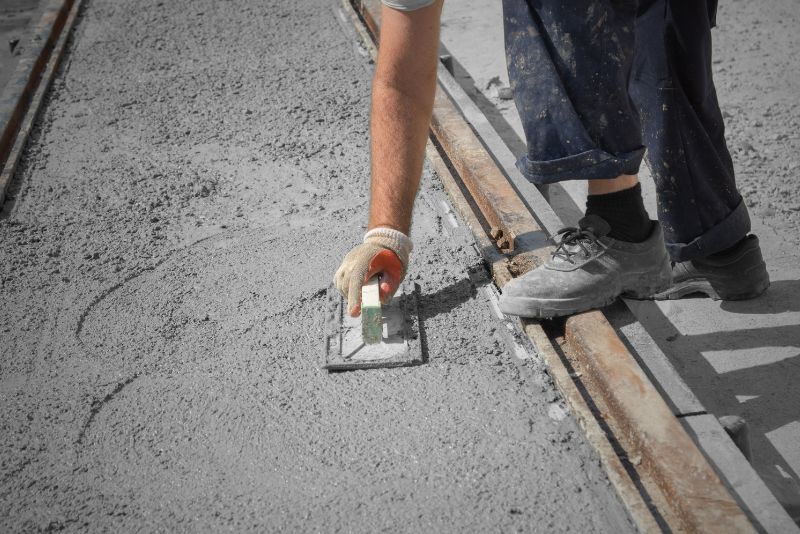
🔵 Proper curing procedures and protection
🔵 Quality concrete mixes for local conditions
If your existing slab has developed cracks, we assess whether they’re structural concerns or cosmetic issues and recommend appropriate repair solutions.
Soil Conditions and Your Concrete Slab
Fraser Coast soils vary from sandy coastal areas to reactive clay inland. Each soil type needs a different slab design approach. Sandy soils generally provide good bearing capacity but might need deeper excavation to reach suitable founding material. Clay soils can be reactive, swelling when wet and shrinking when dry.
We start every project with geotechnical testing to classify your soil and determine bearing capacity. This testing tells us what slab design will work on your specific site. Reactive clay sites need waffle pod slabs or raft slabs designed to handle soil movement. Sandy sites might need different foundation depths.
Soil conditions also affect drainage requirements. Clay soils drain slowly and might need sub-slab drainage systems. Sandy soils drain quickly but might allow more ground moisture movement. We design your slab to work with your specific soil conditions, not against them.
Concrete Slab Curing Methods for Queensland Climate
Proper curing develops concrete’s full strength and durability. Maryborough’s subtropical climate creates specific curing challenges — hot, dry conditions make concrete dry too fast, while high humidity and rain require different protection. We adjust curing methods for weather conditions during your pour.
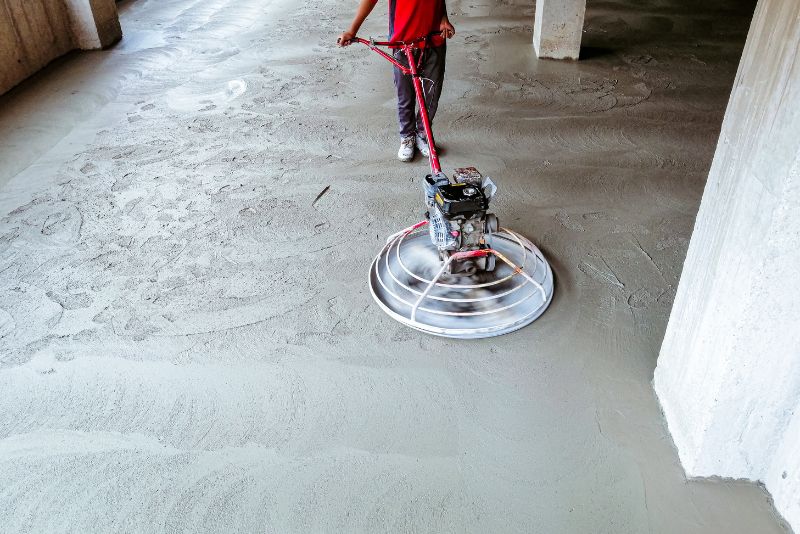
Hot weather curing involves keeping concrete moist and cool. We use water sprays, wet hessian coverings, or curing compounds that seal moisture into the concrete. This prevents rapid drying that causes surface cracks and reduces strength.
Wet weather curing protects fresh concrete from rain that can damage the surface. We cover slabs with plastic sheeting and time pours to avoid forecast rain. If unexpected rain threatens, we have protection ready to deploy quickly.
Concrete Slab Installation Timeline: What to Expect
Understanding your concrete slab timeline helps you plan the rest of your building project. A typical residential house slab takes 2-3 weeks from excavation to handover, depending on weather and site conditions. Commercial slabs need 3-6 weeks for larger projects with more complex engineering requirements.
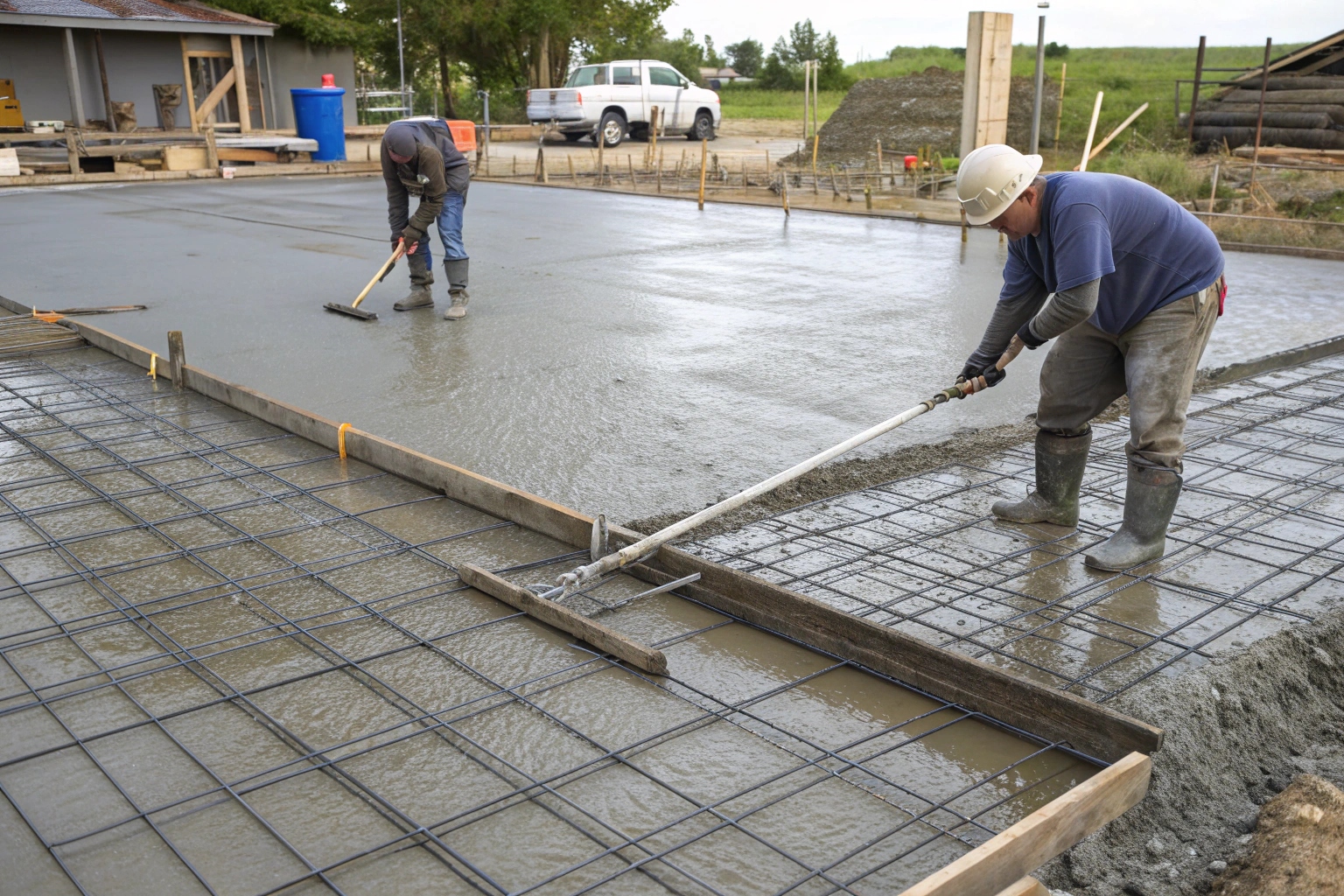
Week one covers site preparation — excavation, soil testing if not already done, and base compaction. Week two involves formwork installation, reinforcement placement, service conduit positioning, and termite barrier installation. The concrete pour happens once all inspections are passed, typically early in week three. Then we need 7-10 days of curing before the slab is ready for construction to continue.
Weather affects these timelines. Heavy rain delays excavation and prevents concrete pours. Extreme heat requires special curing procedures. We schedule pours for suitable weather windows and keep you informed if conditions force delays. Better to wait for good conditions than rush a pour that won’t cure properly
FAQs
Installation time varies depending on the size and complexity of the project. Most residential slabs can be completed in 1-3 days, with an additional curing time of approximately 7-28 days before full load bearing.
Proper site preparation includes excavation, creating a level base, installing formwork, adding a vapour barrier, and placing reinforcement materials. Our team handles all these steps as part of our comprehensive service.
The recommended thickness depends on the intended use. Typically, residential slabs range from 100mm to 150mm thick, while commercial or industrial applications may require 150mm to 200mm.
Yes, though special precautions may be necessary in colder temperatures. Our experienced team knows how to adjust mix designs and implement appropriate curing methods for all weather conditions.
We employ several techniques, including proper reinforcement, strategic control joint placement, appropriate concrete mix design, and careful curing processes to minimise the risk of significant cracking.
Pricing depends on size, thickness, reinforcement requirements, finish options, and site conditions. Contact us for a customised quote based on your specific project needs.
In some cases, yes. This depends on the condition of the existing slab, elevation considerations, and intended use. Our experts can assess your situation and recommend the best approach.
Contact Us for a Free Consultation
Ready to start your concrete slab project? Contact TrueForm Concreting Maryborough today for a free, no-obligation consultation and quote.
Phone: 0741207422
Email: info@concretingmaryborough.com.au
Our experts will visit your site, assess your requirements, and provide a comprehensive proposal tailored to your needs and budget. We serve the entire Maryborough region and surrounding areas.